Authentic or Curated? The Answer Is Probably Both, and That's Fine

Photo by Photo by Helena Lopes on Unsplash on Unsplash
The Myth We Keep Selling Ourselves
Somewhere along the way, the internet decided that "authentic" meant raw, unpolished, and completely unplanned. Like if you thought too hard about what you were posting, you'd automatically lost the authenticity card. And honestly? That's a really exhausting standard to hold yourself to.
Because here's what nobody wants to say out loud: every single thing you put online — even the messy, emotional, no-filter stuff — is still a choice. You chose to post it. You chose the words. You chose the moment. That's curation, full stop. And the sooner we stop treating that word like it's a dirty secret, the easier all of this gets.
I've been thinking about this a lot lately. There's this weird pressure in creator spaces, especially in the US where hustle culture and "realness" somehow coexist without anyone blinking, to be simultaneously strategic and spontaneous. To be relatable but aspirational. To share everything but also maintain boundaries. To be yourself — but, like, your best self. It's contradictory and kind of wild when you lay it all out.
The Performance Was Always Part of It
Here's something worth sitting with: performance isn't the opposite of authenticity. Humans have always performed versions of themselves depending on context. You act differently at a job interview than you do at a backyard barbecue. You talk to your mom differently than you talk to your college roommate. That's not fake — that's just social intelligence.
When you're online, you're essentially in a room with thousands of people at once. Of course you're going to modulate. Of course you're going to think about how something lands. The question isn't whether you're performing — it's whether the version of yourself you're performing actually feels like you.
That's the distinction I keep coming back to. There's a difference between performing a version of yourself that genuinely reflects your values, your humor, your actual perspective on things — versus performing a character that has almost nothing to do with who you are privately. Both are choices. Only one of them tends to feel sustainable long-term.
Why "Unfiltered" Is Still a Filter
Let's talk about the "unfiltered" era of content for a second, because it's fascinating. The whole movement was a reaction to overly polished, unrealistic content — and that reaction made total sense. People were exhausted by perfection. They wanted to see stretch marks and messy kitchens and creators crying in their cars.
But what happened? Those posts got optimized too. The messy kitchen became a carefully chosen backdrop. The crying-in-the-car video got filmed, reviewed, and sometimes re-filmed. The vulnerability itself became a content format. And look — I'm not saying that makes it fake, necessarily. But it does mean we have to stop pretending that "unfiltered" is somehow exempt from the same curation dynamics as everything else.
Even deciding which vulnerable moment to share is an editorial decision. You're not posting every breakdown. You're not live-streaming every ugly argument or every 3 a.m. spiral. You're selecting. And again — that's fine. That's healthy, even. But let's call it what it is.
The Psychological Weight of Chasing "Real"
What actually concerns me is when creators start genuinely believing they owe their audience an unmediated window into their lives. That's where things get psychologically messy. Because if "authentic" means total transparency, then any moment of privacy starts to feel like a betrayal. Any boundary starts to feel like dishonesty.
That's not sustainable. And it's not true.
You are allowed to have a self that exists completely outside of what you share online. You are allowed to process experiences privately before — or instead of — turning them into content. Choosing not to share something doesn't make you inauthentic. It makes you a person with an interior life.
The creators I find most compelling aren't the ones who share everything. They're the ones who share intentionally — who have clearly thought about what they want to put into the world and why, and who seem genuinely at peace with the parts of themselves they keep private. That intentionality reads as authentic, even if the content itself is polished.
Finding Peace With the Contradiction
So where does that leave us? I think it leaves us in a place where we have to make a kind of peace with the paradox. You can be genuine and strategic. You can be real and selective. You can care deeply about your audience and maintain boundaries around what you share with them. None of those things cancel each other out.
What I've found helpful — and this is just my take — is shifting the question from "am I being authentic?" to "does this actually reflect something true about me?" The first question is almost impossible to answer cleanly because authenticity is slippery and the internet will always find a way to poke holes in it. The second question is more useful. Does this post, this video, this caption — does it reflect something real about my perspective, my experience, my sense of humor, my values? If yes, it can be curated to within an inch of its life and still feel genuine.
If no, then no amount of lo-fi aesthetics or vulnerable-sounding captions is going to make it land as real. People can feel that gap, even if they can't name it.
Your Story, Your Terms
At the end of the day, this is your platform. Your story gets told on your terms — not according to whatever the internet has decided "real" looks like this week. That standard shifts constantly anyway. Oversharing was once brave; now it can read as attention-seeking. Polish was once aspirational; now it can feel cold. You cannot win by chasing the definition.
What you can do is figure out what you actually want to say, and say it in a way that feels true to you — knowing that "true to you" will include some curation, some editing, some thinking before you post. That's not a flaw in the process. That's just what it looks like to be thoughtful about the space you take up online.
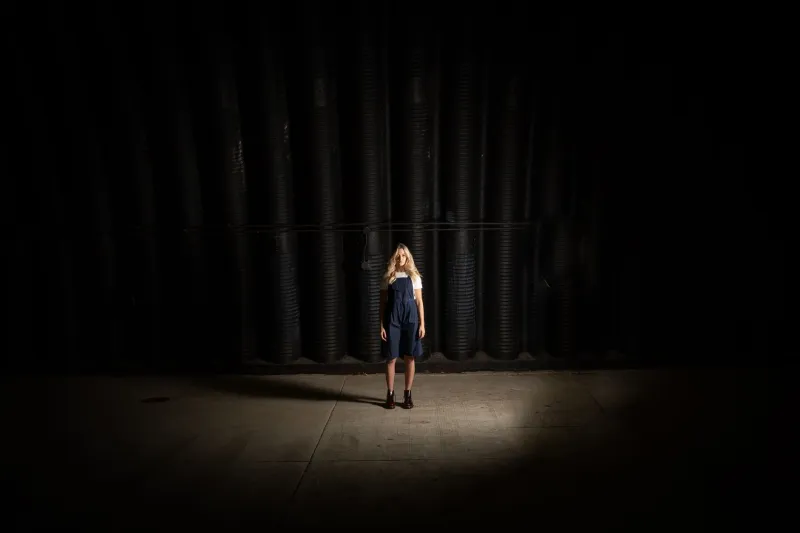
The spotlight was always going to involve some performance. The goal was never to eliminate that. It was to make sure the person performing still recognizably belongs to you.