You Chased the Dream — So Why Does Winning Feel So Weird?
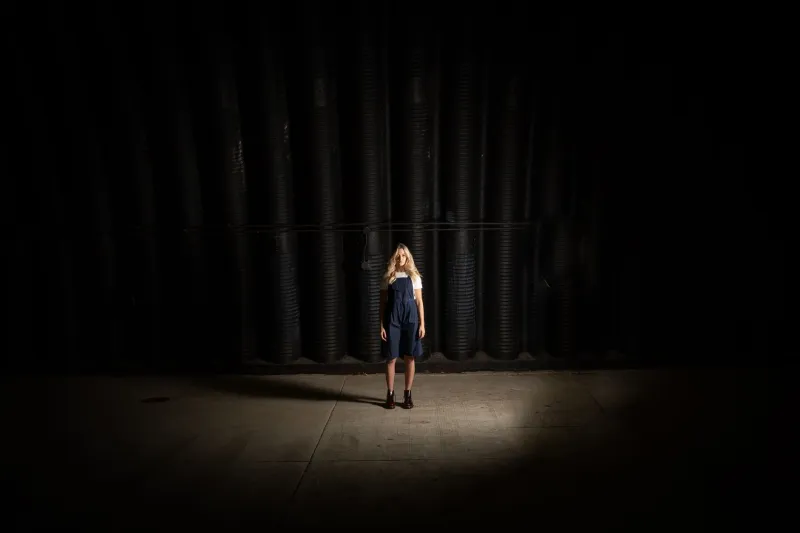
There's this version of success that lives rent-free in your head for years. It's cinematic. The moment everything clicks, you're standing somewhere beautiful, probably in good lighting, feeling whole and certain and finally, finally at peace. The hustle pays off. The algorithm rewards you. People who once scrolled past you now stop and stare. You made it.
And then you actually make it.
And it's... fine? It's good, even. But it's also kind of disorienting in a way you weren't expecting. The confetti settles and you're left standing in the middle of something you worked so hard to build, wondering why it doesn't feel the way you always imagined it would.
If that hits close to home, you're not broken. You're just experiencing what I've started calling the spotlight paradox — and it's way more common than people admit out loud.
The Dream Version Was Always Going to Win
Here's the thing about the fantasy of success: it's been curated over years. Every time life got hard, you added a little more to it. A bigger number. A better opportunity. A moment where someone important finally sees your value. That imagined version of arrival gets richer and more detailed every time reality disappoints you.
So by the time the real thing shows up, it's competing against something you've been perfecting in your mind for years. Of course it's going to fall short. The dream version doesn't come with inbox anxiety or weird political dynamics or the very specific exhaustion of being visible at scale. The dream version is all highlight reel, no behind-the-scenes.
Real success is messier. It comes with new pressures you didn't anticipate, responsibilities that pile up faster than the rewards do, and a strange kind of loneliness that genuinely blindsides you.
The Loneliness Nobody Puts in the Brochure
Visibility is isolating in a way that's hard to explain unless you've been there. When more people are watching you, it gets harder to tell who actually knows you. Conversations start to feel performative. You catch yourself wondering whether people are genuinely in your corner or just adjacent to something they find useful.
And the people who were with you before the glow-up? Sometimes those relationships get complicated too. Not because anyone did anything wrong, necessarily — just because the dynamic shifted and nobody has a clean script for how to handle that.
You're surrounded by more people than ever, and somehow that makes the quiet moments feel quieter. That's the spotlight paradox in action. The more eyes on you, the more alone you can feel inside the thing you built.
I've talked about this kind of loneliness in other ways before — the million-eyes-on-you-and-still-isolated feeling is real and it deserves to be named. But what's different here is the surprise of it. You didn't see it coming because the dream version of success didn't include it.
Grieving the Fantasy (Yes, Really)
This is the part that sounds strange but matters: you might need to actually grieve the version of success you imagined.
Not because what you have isn't good. It might be genuinely incredible. But that dream you carried — the one that got you through the hard years — it's gone now. It served its purpose. It pulled you forward. And now that you're on the other side, you have to let it go, and that's a real loss even if it sounds like a privilege problem.
Giving yourself space to feel that is not ingratitude. It's not being spoiled or dramatic. It's being honest about the fact that humans are meaning-making creatures and we attach a lot of emotional weight to the futures we imagine. When reality diverges from the story we told ourselves, that disconnect needs somewhere to land.
So let it land. Name it. Talk to someone you trust about it. Write it down. Do whatever helps you close the loop on the dream version so you can actually show up for the real one.
Learning to Want What You Have
Once you've done that work — once you've acknowledged the gap and grieved the fantasy — something interesting starts to happen. You can actually see what's in front of you.
Not through the filter of what you thought it would be. Not compared against some idealized version. Just as it is: complicated, imperfect, genuinely yours.
And when you look at it that way, there's usually a lot worth appreciating. The community you've built. The creative freedom you've earned. The fact that you get to do this at all — whatever this is for you.
Enjoyment isn't automatic. That sounds counterintuitive, but it's true. You have to practice finding the pleasure in what you've actually built rather than mourning what you thought it would feel like. That's an active choice, and it takes real effort, especially when the pressure of visibility is loud and the comparison spiral is always one swipe away.
The Pressure That Comes With Being Seen
Let's talk about that pressure for a second because it's a big piece of this puzzle.
When more people are watching, the stakes feel higher. Every move gets scrutinized — by your audience, by your industry, and honestly, by yourself. There's this weird thing that happens where success raises the bar for your own next move, and suddenly the creative freedom you were chasing starts to feel a little more like a tightrope.
You wanted visibility. Now you have it. And it's simultaneously everything you asked for and kind of a lot to carry.
The key — and I'm still working on this myself — is remembering why you started. Not the outcome you were chasing, but the actual thing that made you want to create or perform or share in the first place. That original impulse is usually still there. It's just buried under the noise of what success has become.
Dig it back up. Protect it. Let it remind you that the spotlight was never the point — it was just supposed to let more people see the point.
You're Allowed to Redefine What Winning Looks Like
Here's my honest take: the version of success you imagined at 19 or 22 or whatever age you started dreaming big doesn't have to be the version you're building toward now. You're allowed to update the vision.
Maybe winning looks less like a number and more like a feeling. Maybe it's about the work you're most proud of, not the work that got the most traction. Maybe it's building something sustainable instead of something spectacular.
The spotlight paradox doesn't have to be a permanent state. It's mostly just what happens in the transition between the dream and the reality — that in-between space where you're figuring out who you are now that you've become who you were trying to be.
Sit in that space for a minute. It's uncomfortable, but it's also where the most honest version of your story gets written.
And that version? That's the one worth telling.