I Blanked on a Sponsor's Name in Front of 3,000 People. Here's What I Did Next.
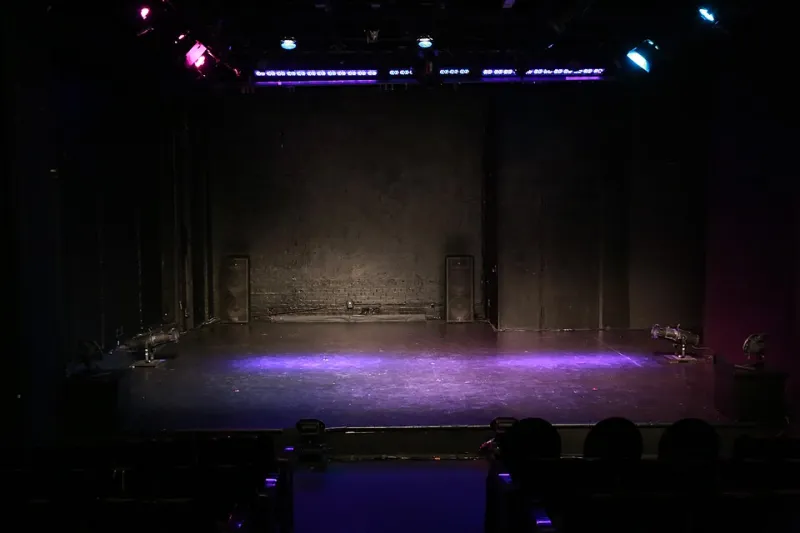
Photo: Anthony Sertel Dean, CC BY-SA 4.0, via Wikimedia Commons
Last month I hosted a brand event in a 3,000-seat theater. I had a script, a teleprompter, and a sponsor whose name I had said out loud in rehearsal eleven times. At 7:42 p.m., mid-sentence, the name left my brain like a cat through an open door. I said, 'And none of this would be possible without—' and then I stopped. Not a dramatic pause. A full system freeze. The room was not with me. The room was watching a woman forget a word.
The Freeze
Here's what it feels like: your ears get hot. The lights get brighter. You can hear your own heartbeat doing a bad drum solo. I tried to make a joke. The joke was not good. I said, 'I'm going to need someone to yell it out,' and someone did yell it out, and it was not the sponsor. It was a guy named Dave. Dave was wrong. I thanked Dave. I moved on. I finished the segment with the energy of a phone at four percent.
The Walk Back to the Dressing Room
Backstage, I did the thing we all do: I narrated the disaster in real time. 'That was career-ending. That's going to be a clip. I'm going to be the person who forgot the sponsor.' My manager said, 'You're not.' I said, 'I am.' We went back and forth like that for ten minutes. Then I opened my notes app and drafted an apology email to the sponsor. I wrote four versions. The fourth one was good. I didn't send it. Not because I was too proud. Because I realized the apology was for me, not for them.
The Apology Note I Didn't Send
The draft said: 'I am so sorry for the error. I take full responsibility. I understand if you want to pull the partnership.' It was honest. It was also a little bit of a bid for reassurance. The sponsor's actual team emailed the next morning: 'Great event. Can we get the clip for social?' That was it. No firing squad. No dramatic music. The internet did not eat me alive. A few people made jokes. One person made a very funny edit set to a dial-up modem sound. I laughed. Then I closed the app.
What Actually Happened Online
The clip got about 40,000 views, which is enough to feel bad but not enough to be a real scandal. The comments were split into three groups: people who thought it was funny, people who thought it was fake, and people who wanted to explain the sponsor's entire brand history to me. I replied to one comment — 'Dave, you're a legend' — and left the rest. The silence was the strategy. Not everything needs a response. Some things just need to be a thing that happened.
The Recovery Playbook That Worked
Here's what I actually did, in order. I named it out loud to one person. I stopped rehearsing the story for maximum drama. I corrected the record once, publicly, with a short note: 'Sponsor name is [redacted]. Dave is not affiliated. We good.' I did not turn it into a bit. I did not make it my whole personality. I took a walk. I ate a meal. I went to the next gig and said the sponsor's name correctly, twice, like a person who has learned nothing and everything. And I gave myself a 24-hour window to feel stupid. After that, I had to move on.
The Part Nobody Tells You
Public mistakes are only as big as the space you give them. If you make it a crater, everyone gathers around the crater. If you make it a pothole, people step over it. The trick is not to pretend you don't care. The trick is to care at the right volume. I cared enough to correct it. I cared enough to apologize to the person who needed an apology. I did not care enough to ruin my week. That's the whole playbook: fix what's fixable, laugh where you can, and don't let one frozen sentence become the narrator of your career.